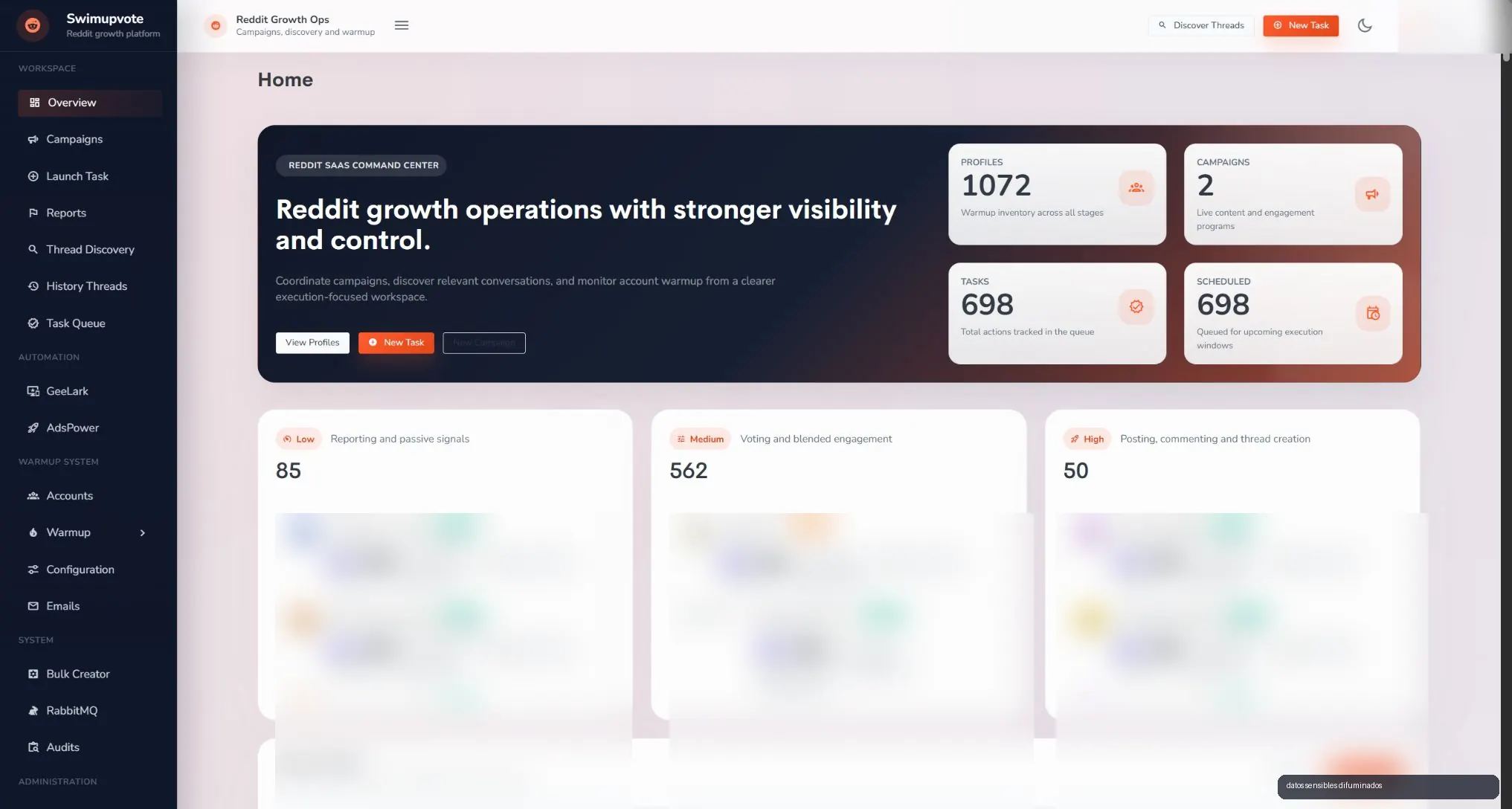
The engineering problem in SwimUpvote is coordinating tasks across Reddit profiles while keeping their state visible to the operator. Its panel connects campaigns, profiles, scheduled work and execution results. This case explains that architecture and what its screenshots let you inspect.
The screenshots are sanitized. They show the product structure, but they are not a performance test or evidence of sustained throughput or commercial results. I do not report an account volume or completed-task count because this case does not provide measurements to support one.
The problem: coordinating profiles, tasks and environments
A task needs a profile, an available environment and a scheduled execution time. When that information is scattered across spreadsheets and scripts, investigating a failure means reconstructing the journey manually. SwimUpvote centralizes the profile inventory, its states, campaigns and work queue.
The operational question is specific: what was requested, which resource was assigned and what result came back? That relationship lets an operator review pending work and locate the execution that needs attention.
Separate the panel, queue and workers
The technical architecture described in the project divides responsibilities:
- The backend and panel manage profiles, campaigns, tasks and records.
- RabbitMQ separates job creation from execution.
- AdsPower consumers run browser workflows.
- The GeeLark scheduler coordinates mobile environments with Appium and ADB.
- Account or profile locks prevent conflicting simultaneous execution.
- START, HEARTBEAT, END and ERROR states and logs return information to the backend.
- Retries with backoff handle recoverable failures.
Separating these components helps locate scheduling, execution or reporting problems. For broker decisions, the RabbitMQ architecture guide covers acknowledgements, redelivery and limits. Those are general design criteria, not certification that this case implements every guarantee.
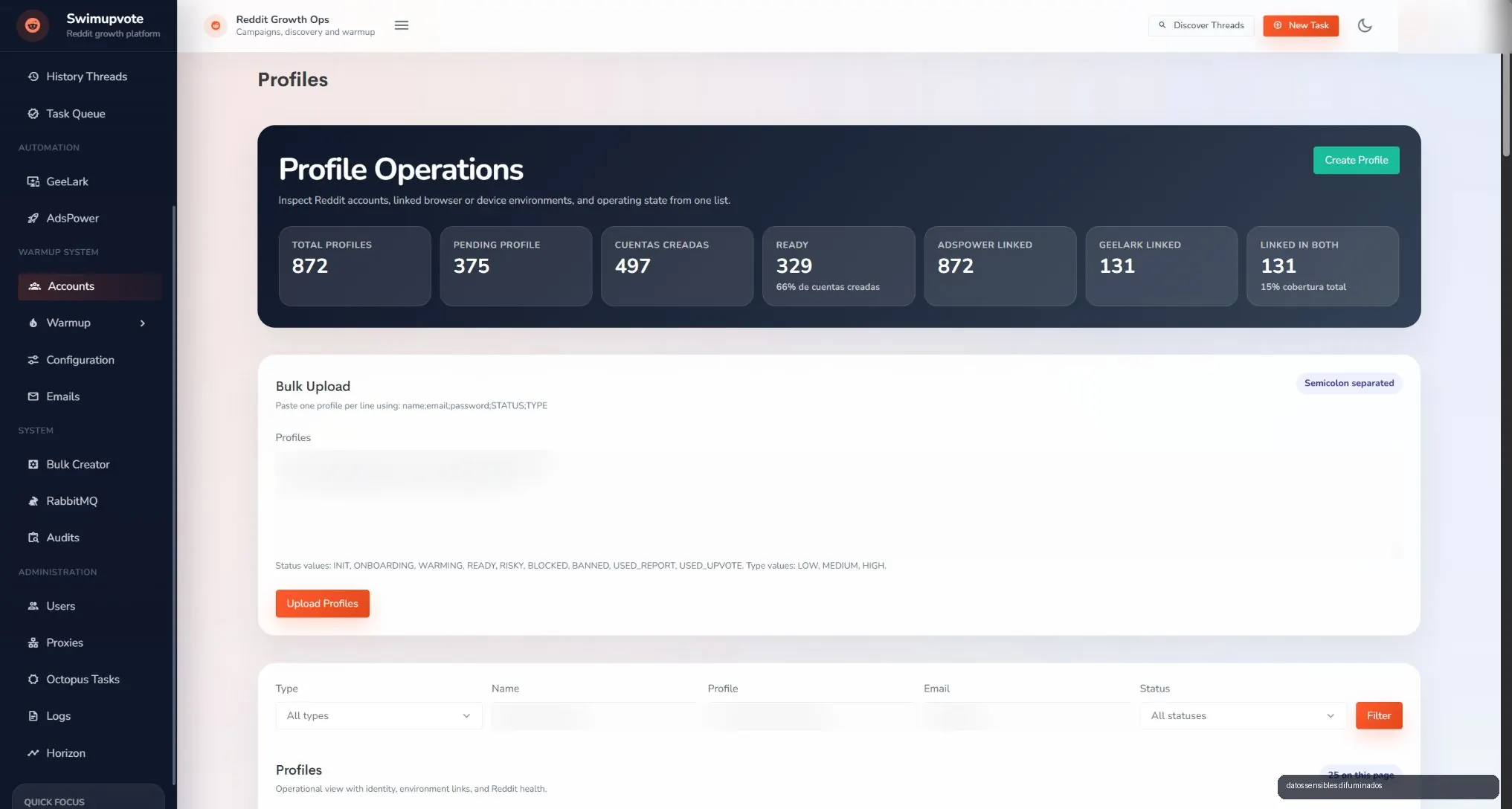
Two execution paths: browser and mobile
SwimUpvote coordinates browser profiles through AdsPower and mobile environments through GeeLark, Appium and ADB. In the mobile workflow, the scheduler reserves a slot, prepares the device, opens the automation session and returns the result to the backend. The account remains locked while a job is active.
The panel provides a shared view across different execution paths. The engineering cost is maintaining two diagnostic paths: a browser session error and a device failure need different evidence. The mobile work queue guide explains how to approach device ownership, recovery and result review.
What evidence can an operator inspect?
The task queue brings together job type, profile, campaign, state, schedule and a screenshot reference. Alongside logs, it places a failure within a specific execution. The screenshot below shows that organization; row contents are blurred.
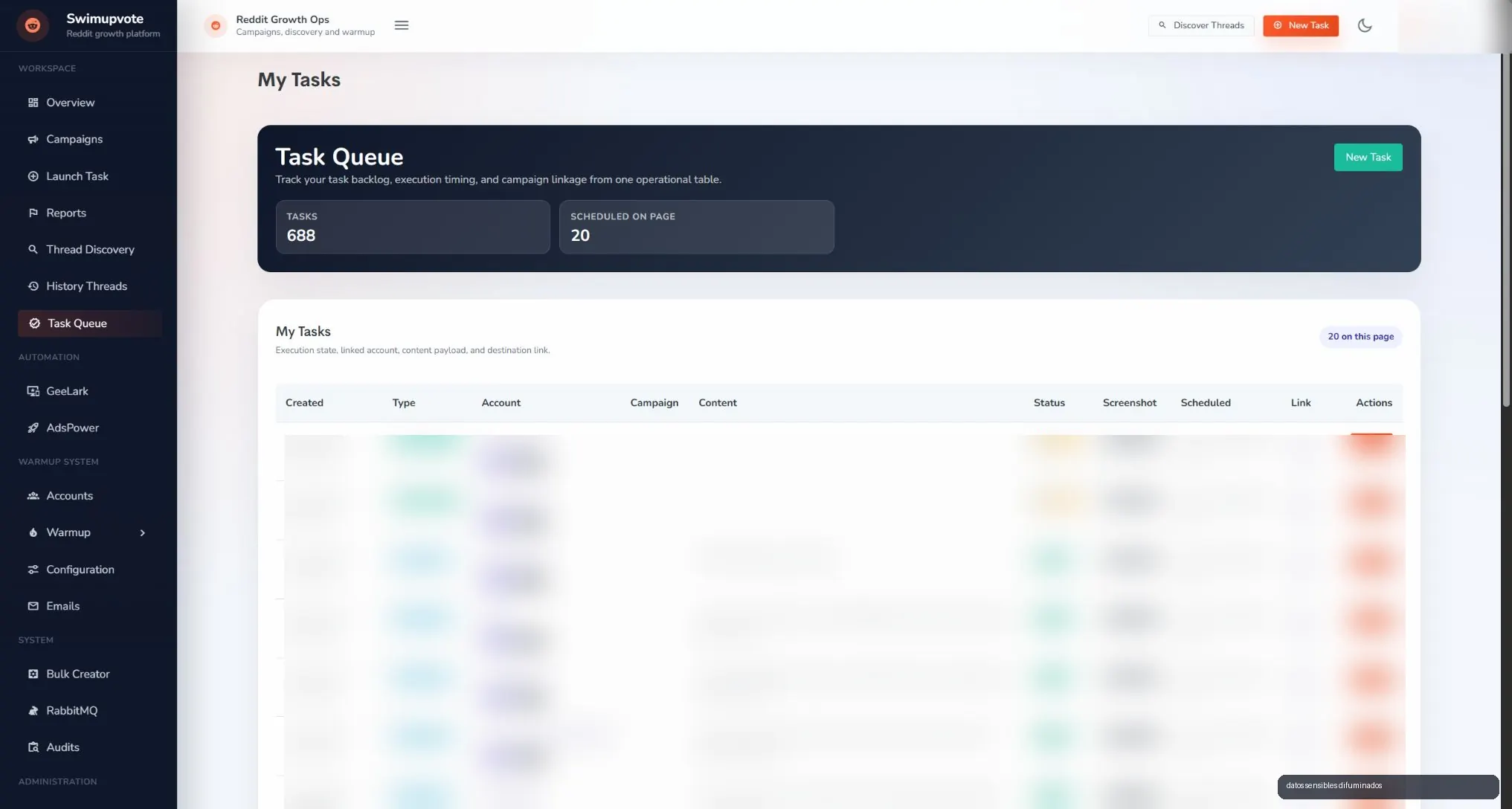
A final state and a screenshot help investigation, but do not by themselves prove that the business objective was met. For a new engagement, I would agree on the result to verify and the cases requiring human review. The Adslyfy case study shows another use of operational evidence, focused on ad monitoring.
Campaigns and discovery in the panel
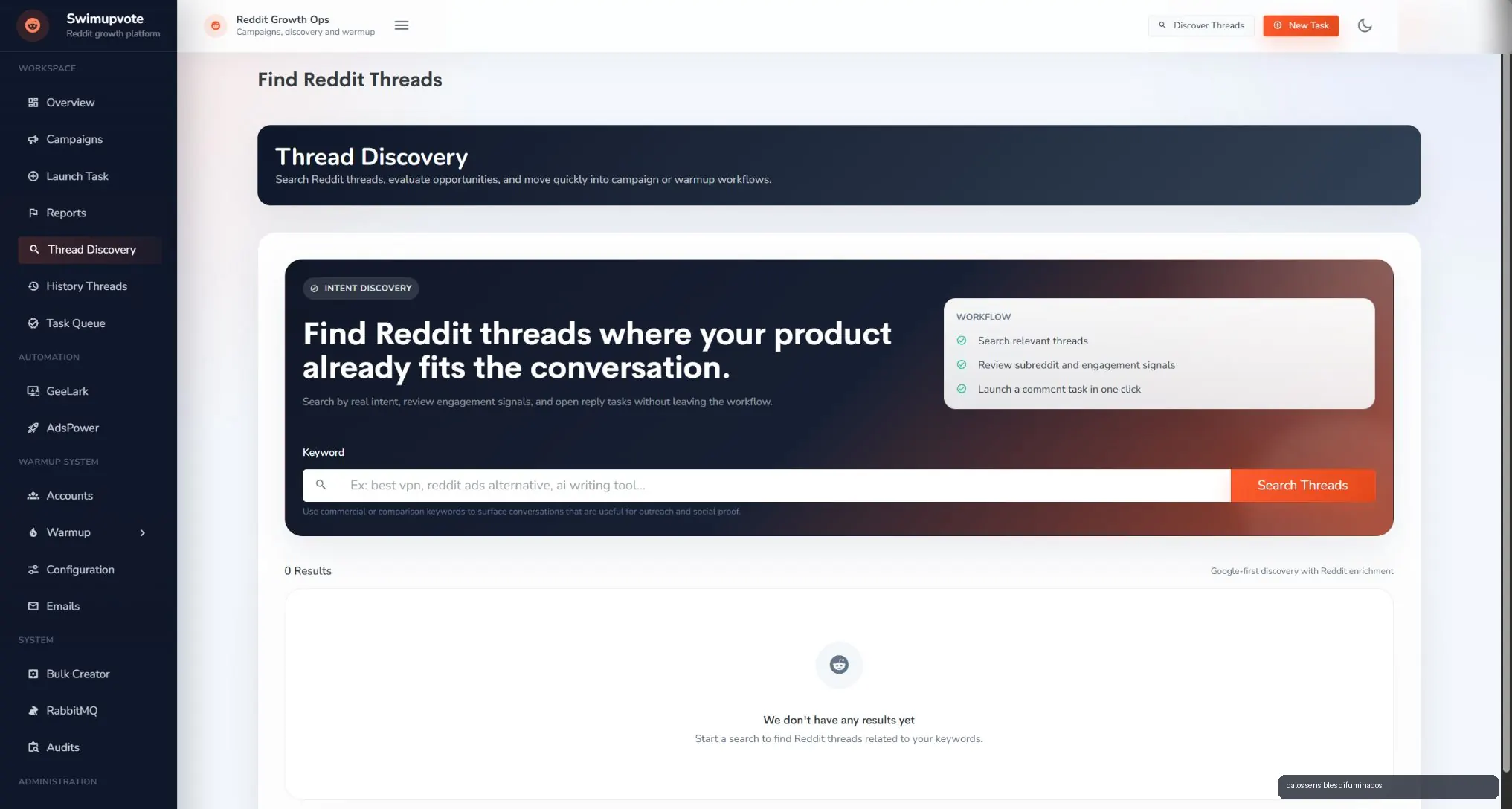
The discovery view lets operators review conversations and connect them with campaigns or tasks. Its role in this case is to show how the panel connects work selection with tracking. I do not attribute conversion, reach or acquisition improvements to this interface.
Capacity needs measurement
A large inventory, concurrency and completed work are different measures. Adding workers or slots does not guarantee more throughput: workflow duration, environment availability or external dependencies may be the constraint.
Before committing to capacity in another project, I would define a representative task mix and measure waiting time, duration, errors, retries and manual review. I would also check what happens when a worker or environment becomes unavailable. These are proposed commissioning tests, not results already achieved by SwimUpvote.
What to agree before building a similar platform
If your team coordinates work across several systems and loses track when a task fails, I can review the process through my business automation service. If the main problem is bringing together states and data from existing systems, start with internal platforms and integrations.
To define the engagement, I propose agreeing on these points with the team that will operate the system:
| Decision | What to document |
|---|---|
| Included work | Workflows, inputs, expected results and tasks that will remain manual. |
| Resources and dependencies | Available environments, connected systems and concurrency constraints. |
| Failure and recovery | When to retry, when to stop and who reviews an uncertain result. |
| Delivery evidence | A sample of tasks traceable from request to result, including failures. |
| Ongoing operation | Access, documentation, maintenance and the incident coverage to be agreed. |
That scope makes it possible to compare automation proposals without confusing an interface with the operation behind it. The table proposes an engagement scope; it does not list new SwimUpvote features.
Find where the operation loses visibility
This case documents a panel, queues, workers, locks and reporting. Payloads, credentials, identities, selectors and internal configurations remain private. The useful evidence is how the components connect and what the operator needs to see.
If you are considering an automation platform, tell me about the process you need to coordinate, the systems involved and a failure example without sensitive data. We can turn that into an initial scope and concrete delivery acceptance criteria.